
What are brand cults?
Shopping used to be transactional–you have a product, I give you money. Today, it’s not so simple. Products are brands, and the most successful brands provide communities, identities, or even belief systems. Learn why the psychology behind “cult brands” has quietly moved from the fringes into everyday marketing.

In this episode, Dr. Mara Einstein sits down with Chris Kneeland, co-founder of Cult Collective and The Gathering, and anthropologist Ali Demos of StrawberryFrog, to unpack the surprising overlap between cult psychology, brand loyalty, and modern movement-making.
Together, they explore why brands like Apple, LEGO, Costco, REI, Harley-Davidson, YETI, and even gas stations inspire devotion that looks a lot less like shopping and a lot more like belonging. They also break down how movements like Opt Outside or Money Like a Woman emerge from cultural undercurrents—and why some brands earn genuine trust while others fall into the trap of purpose-washing – claiming a cause they aren’t committed to – ultimately leading to boycotts and consumer distrust.
This conversation pulls back the curtain on the mechanics of brand cults: rites and rituals, villains and fights, co-creation, identity shaping, the erosion of traditional institutions, and the human desire to affiliate with something bigger than ourselves. It’s a candid look at how these forces shape consumer behavior—and why personal meaning-making has become fully embedded in the consumer marketplace.
In this episode:
Why “cult brand” doesn’t always mean niche—and how Barbie, the NFL, LEGO, and Porsche ended up in The Gathering’s Brand Hall of Fame
The difference between a brand cult (top-down, ritual-driven) and a brand movement (bottom-up, co-created, culturally activated)
How brands use rites, rituals, insider language, and “picking a fight” to build irrational loyalty
Why some brands (Lush, Patagonia, CVS) take real risks that prove purpose isn’t just a tagline
The anthropology of cult / culture / cultivate, and why brands have become identity engines as religion and long-term employment decline
Why Costco shouldn’t work on paper—and why it’s one of the strongest cult brands in America
Why even gas stations or utilities can build cult-like devotion
Mentioned in this episode:
Books & Frameworks
The Power of Cult Branding – Matthew W. Ragas & Bolivar J. Bueno
The Culting of Brands – Douglas Atkin
Behavioral economics research (Ariely, irrational decision-making)
Millward Brown research on category-normative marketing
Brands, Campaigns & Movements
The Gathering / Brand Hall of Fame
REI – Opt Outside
Four Leaf Credit Union – Money Like a Woman
Northwell Health – Raise Health / It Doesn’t Kill to Ask
Lush Cosmetics (activist retail actions)
Patagonia, Ben & Jerry’s, Apple, LEGO, Jeep, Vans
S’well (anti–single use plastic)
Snickers – “You’re not you when you’re hungry”
Southwest Airlines democratizing travel
Wawa, Buc-ee’s, TikTok creator community
Spike ball
Scholars, Thinkers, and Public Figures
Douglas Atkin – former Airbnb global head of community and author of The Culting of Brands, whose work bridges social-movement organizing and brand communities
Matthew W. Ragas & Bolivar J. Bueno – authors of The Power of Cult Branding, foundational research in identifying attributes of cult-like brand loyalty
Daniel Ariely – behavioral economist known for work on irrational decision-making and why consumers don’t behave according to classical economic logic
Muniz & O’Guinn – marketing scholars who established the academic framework for understanding brand communities
Jane Goodall – referenced metaphorically by Chris Neelan for her observational approach, illustrating how brand leaders’ behavior can be studied as a form of social anthropology
Frances Haugen – relevant to the broader conversation about platform design, vulnerability, and algorithmic influence
Caitlin Clark – cultural reference point for the rise of women's economic and cultural influence, relevant to the “Money Like a Woman” movement
Taylor Swift – referenced as an example of cultural energy and economic force shaping movement opportunities
Steve Jobs & Tim Cook – examples of leadership transitions within cult brands, and how cult status persists (or doesn’t) beyond charismatic leadership
Jeff Bezos – noted as one of the few brand leaders placed on a quasi-mythic pedestal
Adam Neumann – invoked indirectly via comparisons to brand-movement failures and cultural overreach (WeWork as a “movement” turned cautionary tale)
About the guest — Ali Demos
Ali Demos is Group Strategy Director at Strawberry Frog and leads brand planning on Northwell Health, FourLeaf Federal Credit Union, and several other clients. Trained as a cultural anthropologist, Ali leads a video ethnography practice within the strategy department and has made ethnographic films for many global brands, including IKEA, IBM, American Express, Starbucks, Dove, UPS, and DuPont. Ali has also been a hands-on, streetwise cultural researcher. She trained at the Citizen’s Police Academy in New York City for dissertation research on masculinity and law enforcement; explored the “Bollywood” phenomenon and the cult of Hindi movie stars while traveling in India; and wrote a thesis about the paradoxes of gender identity in the highly secretive community of Boston-area cross dressers. She holds an M.A. in Cultural Anthropology from Princeton, and a B.A. in Social Anthropology from Harvard. Learn more about her work on LinkedIn.
About the guest — Chris Kneeland
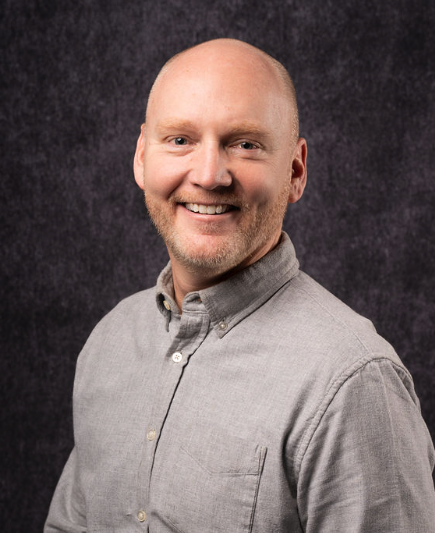
Chris Kneeland is the cofounder of Cult Collective (www.cultideas.com), a marketing advisory firm headquartered in Calgary, Alberta. He also cofounded The Gathering (www.cultgathering.com), a Forbes top-rated business conference, held annually in Banff, AB. Chris also chairs the Selection Committee for North America’s Brand Hall of Fame. Chris is currently serving as the fractional CMO of Spikeball.
Chris specializes in delivering profitable growth through the smarter deployment of discretionary resources, improving elements of the customer journey that matter most, and increasing internal and external engagement via the application of eight proven ‘cult brand’ principles. Chris has worked with some of North America’s most beloved brands, including Harley Davidson, Best Buy, H-E-B, The Home Depot, Canadian Tire, GoDaddy, Keurig, and John Deere. He has helped launch over a dozen start-ups, and currently serves as a Fractional CMO for Spikeball. Chris has written two books on Branding (“Fix, A New Prescription for Customer Engagement” and “What’s Truly Possible”), and is a frequent speaker at marketing conferences and industry events across North America.
About the host
Dr. Mara Einstein spent a decade in corporate marketing working for some of the world’s biggest brands before turning her focus to exposing the industry’s inner workings. Now a tenured professor of media studies at CUNY, she’s dedicated to helping people understand how marketing shapes what we buy, what we believe, and even who we think we are. With a background spanning business, media, and the arts, Dr. Einstein brings sharp insight and humor to the systems that sell us our identities—and the power we have to push back.
Pick up Dr. Einstein’s book Hoodwinked: How Marketers Use the Same Tactics as Cults on
Bookshop.org (and beyond): https://bookshop.org/a/116018/9781493086153
Website: https://www.drmaraeinstein.com
Books: https://www.drmaraeinstein.com/writing
Instagram, TikTok, Threads: @drmaraeinstein
YouTube: https://www.youtube.com/@Drmaraeinstein
Credits
Production: Multitude
Lead Producer & Editor: Bren Frederick
Music: Marc Langer
Cover art: Cayla Einstein